Friday, January 31, 2014

He said, She said: Thoughts on the State of the Union Address and the Republican Response


Alright. I have to give President Obama credit. He’s a good talker. I think he calls for some noble causes. Let’s get rid of policies against women that “belong in a ‘Mad Men’ episode.” Guantanamo Bay is long overdue for closing as well. And let’s get the minimum wage up. “$10.10. An easy number to remember.”
                
But let’s face it. Obama and his administration dropped the ball this past year. Obama misspoke, to put it lightly, about being able to keep our health plan on Obamacare, and let’s not get started on the NSA’s government surveillance. It’s going to take a lot from him to gain our trust back.


The Republican Party’s response isn’t worth much, either. Rep. Cathy McMorris Rodgers of Washington spoke a lot of lofty ideas about the American dream, and about how she had to work at McDonalds to pay her way through College. She talked about her son, Cole, who has Down Syndrome. Relating seeing “all the things he can do, not those he can’t,” to the idea that “we are not defined by our limits, but by our potential,” was a nice touch.

The problem is that there weren’t any real specific plans. It was just about giving the American people more “opportunities” as she called them. But there wasn’t any mention of what those opportunities would be. At least Obama had goals. She said it was a “more hopeful, Republican vision . . . one that champions free markets - and trusts people to make their own decisions, not a government that decides for you.” However, this is the same free market that is allowing multi-billion dollar companies like Wal-Mart to get away with not paying its employees a living wage. And some corporate CEO’s on the more conservative side of the political spectrum, are okay with this.

“If we eliminated the minimum wage law,” said Peter Schiff, CEO of Euro Pacific Capital, in an interview with The Daily Show’s Samantha Bee, “then individuals would be free to accept jobs at whatever pay they’re able to get.” Samantha then asked Schiff to “Paint me a picture of a person whose work would be worth $2.00 an hour.” Peter Schiff then went on to say, “Someone who would be . . . What’s the politically correct word . . . for, uh, you know, mentally retarded? I’m not gonna say that we’re all created equal, you’re worth what you’re worth.” If this is the kind of free market that Representative Rodgers is talking about, then she needs to rethink the whole Republican angle. It sounds like she’s trying to harp the same money-first, no rules economic system the Republican Party has been harping forever.

Also, her smile looked really phony, and her posture was far too rigid. Seriously, she looked like one of the Stepford Wives.

Friday, August 30, 2013

Occupy Disney


Friends, blog readers, we need to talk.

It is time to take a stand against the devil with mouse ears.

The Walt Disney Corporation has gone completely out of control. In the past eight years, it has bought Pixar Animation Studios, Marvel, and, its most recent prize, Lucasfilm Ltd. It is also, as we speak, in the process of acquiring Studio Ghibli (Ghiblicon.blogspot.com), the Japanese animation studio behind the movie Spirited Away, much beloved by me, and, I’m sure, by anyone who saw it.

Our childhoods have been bought out by this now soulless, money grabbing machine.

The question is, however, what are they going to buy next?

I say this because the Walt Disney Corporation has become the Blob, eating everything in sight and with no signs of stopping.

The original mission of the man Walt Disney was to bring happiness to people with his company’s animated movies. Now, however, its only mission is making money.

We can no longer tolerate this. We, as consumers, need to limit the money we give the company.

The obvious objection to all this, as I understand it, is this may cause Disney to eliminate jobs. I don’t want to put people out of work, either, but Disney will probably do that anyway, whether it needs to or not. 

Following its purchase, Lucasfilm laid off the entire internal development staff at video game company Lucas Arts, “some 150 people” (kotaku.com), which was included in the Lucasfilm acquisition. The statement about the layoffs is as follows:

“After evaluating our position in the games market, we’ve decided to shift LucasArts from an internal development to a licensing model, minimizing the company’s risk while achieving a broader portfolio of quality Star Wars games,” read a statement issued by Lucasfilm. “As a result of this change, we’ve had layoffs across the organization.” (wired.com)

The Disney corporation had no reason to lay off the LucasArts staff. There was no need to minimize the company’s risk, since Disney has no risks to take. It is like killing 150 ants from a colony that controls the world’s sugar population, because they weren’t collecting as much sugar as the colony would like, but didn’t necessarily need.

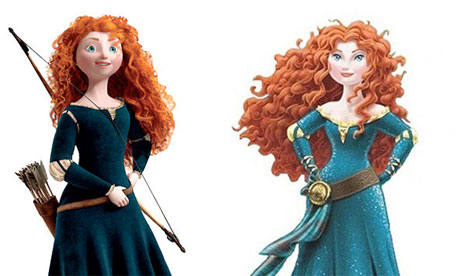
Now, it isn’t that achievable to stop giving Disney money completely, but we still have to own up to the fact that we created this beast. That’s right. We’re the ones who gave Disney our money. We can still make conscious decisions to mitigate our contributions. Let’s look back to the controversy surrounding the redesign of Merida, the princess from Pixar’s Brave. “The L.A. Times reports -- and IGN has independently confirmed -- that ‘according to a Disney representative on Wednesday, the image of Merida that sparked this maelstrom is part of a limited run of products including backpacks and pajamas. But images of the original Merida will also be available on consumer products.’

Don’t buy Disney’s backpacks and pajamas.

Every dollar that you spend is a vote for the kind of world you want to live in. I don’t want to live in a world where one megacorporation, powered by our complacent consumerism, buys out everything that made my childhood special. I don’t think that’s what anyone else wants, either.

Tuesday, July 16, 2013

People are my Job

This past weekend, I was searching online for a job that I wished to apply for. I thought searching applications began on Wednesday, so I wasn't too concerned. I was also on ye olde internet chat. I noticed that a good friend of mine was online, so I messaged that person and engaged in pleasant conversation, while simultaneously opening the web page that I sought.

To my surprise, the company from which I desired employment would begin searching applications on Monday. What did I do? Did I cut short my conversation with her and focus squarely on the job?

No.

I still worked on applying to the job, but I wanted to continue the conversation, because this friend and I are really close, and I wanted to make the time to show her that I cared enough about her to make the time for her.

That's because people are my job.

It seems like we're always sleepwalking. Henry David Thoreau saw this when he decided to live for a year in Walden Pond. In his iconic narrative of these events, called Walden, Thoreau said, “[o]ur lives are frittered away by detail.” I saw this when I took a family trip down to New York City. The streets were filled with stampedes of somnambulists who are always locked in their own heads, constantly letting themselves get frittered away by detail, not bothering to even acknowledge your presence.

We are always roaming around, trying to get things done, whether it be at the office or checking emails on our cell phones when on the bus, or being on the phone for something business related when sitting at the dinner table with the family.

It is important to make an income to support yourself and the people you care about, but one must keep in mind that the job is only a means to an end, not the end itself. Anything that you do in your life must come from a place of compassion.

That is why I chose my friend over any potential employment. This is because I already am employed. I am employed by God to make time to listen to the people that matter to me, and let them know that I care about them. My job, and your job, is to take up the call of duty and spread love to the people. It can be something as simple as saying “hello” to a passerby on the street, or calling an old college friend that you keep saying that you ought to call, but never do. Go to your kids' baseball games. Be there to exercise with them and share their interests.

“Now go and do likewise.”--Jesus

Tuesday, July 9, 2013

Conversation with Myself


Stop!

I can’t believe you’re doing this! How could you? This is despicable. You know that people need you. And yet, there you are, sitting, in your living room, playing video games from dusk ‘til dawn.

Instead of using your mind for conquering the alien armada, why don’t you conquer a real problem, a problem that impacts actual people, not just random artificial intelligence drones that are walking the city of Grand Theft Auto. Instead, use your abilities in a way that brings about actual change.

No, I’m not saying that you have to give up your video games, but have you ever heard of the fable of Plato’s cave? It is the responsibility of the person who sees the light at the end of the cave to lead the other people in darkness to that light. You have a Nintendo Wii. That was made with minerals from the Democratic Republic of Congo. These minerals are harvested by miners who are exploited by rebel militias and the government’s own army: not just men, but women, who are sex slaves, and children as well. Even little girls are raped by these soldiers as a weapon of submission. `

Did I mention that some of the rebel soldiers are children, too?

The miners are unfairly taxed by these rebels and soldiers for the minerals that they procure, and they can barely stay alive, while the ones with the AK-47’s make a profit to buy more guns and rocket launchers in a bid for power and dominance.

There, now you know something. Do something about it.


Saturday, June 22, 2013

Men should be "Brave:" An Alternate Perspective of Media's, I mean Merida's, Redesign

This is deeply disturbing.


A considerable amount of ire has erupted over the redesign of Merida, the central protagonist of Disney's and Pixar's “Brave” to mark her official induction in the Disney family as the eleventh Disney princess. While her original image is a plainly dressed, realistically proportioned teenage medieval Scottish girl, as opposed to an anorexic Cinderella doll, “[f]unctionality has given way to chic belts, sequins, and gold lace. Much more worrying, however, are the physical alterations. The waist has certainly been taken in an inch or two, and I suspect those cheeks are no longer rouged by the bracing Scottish wind” (Krupa IGN.com).

Let us flip this situation on its head for a moment.

Instead of Merida being a girl trying to break free from the social norms of masculinity, let us say that Merida is a prince, who wanted to bend traditional norms of masculinity, by wearing brightly colored clothes (perhaps a dress?), attending wine tastings, and growing out his long, flowing hair. If he were redesigned as wearing a gray suit, clipped, combed hair, and having a six-pack of abs, there wouldn't be outrage: there would be approval.

This demonstrates a significant double standard for men when it comes to bending gender norms. Women are applauded for taking on higher roles in the work place and getting their hands dirty, but if a man were to smell flowers or be cooking in the kitchen, he would be identified as being far too feminine. We're still seeing this in popular culture. Actor Kunal Nayyar's character, Raj, from CBS's TV show “The Big Bang Theory,” is the butt of many jokes that mock his apparent lack of manliness, by having him suggest to his three male colleagues that they attend a wine tasting in the coming weekend, since “the flowers will be in bloom.” One of the guys then drives in the punch line, “We go from talking about women to becoming women.” What makes wine tasting and appreciating nature such a taboo? I attended a wine tasting at my college, and the two faculty members who hosted the event were both men. Also, Earth is the only planet we have, so why not appreciate every aspect of it?

To put this situation in a nutshell, it’s like Michelangelo’s painting on the ceiling of the Sistine Chapel, in which God is reaching out with his hand and giving life to Adam (Vatican.va). Adam is reaching out to God as well. Women reach across borders of femininity, so we can’t expect social change for women unless men are willing to enjoy a glass of chardonnay every once in a while.

Friday, June 7, 2013

"The Long Road Home: One Step at a Time" A Review


Can a comic strip make you cry? Absolutely.

G.B. Trudeau's compilation of Doonesbury comic strips, entitled The Long Road Home: One Step at a Time is proof of this.

It  is all at once hilarious, heart-warming, and gut-wrenching.
The overarching story chronicles the struggle of soldier B.D., his wife, Boopsie, their daughter, Sam, and family friend Ray Hightower, a.k.a. Zonker, as they struggle to adjust to the loss of B.D.'s left leg, in an explosion while overseas in Fallujah, Iraq.

The narrative doesn't bother easing you in. It starts from the first person perspective of B.D., as he is laying down on the ground, drifting in and out of consciousness. The panels on the first two pages alternate between solid black, with only a dialogue bubble filling the void, and quick glimpses of B.D.'s fellow soldiers, calling for medical assistance, and telling B.D. “You're not dying here, man! Not today!”

From there, much of the narrative takes place at Walter Reed Medical Center, where B.D goes through much of his recovery, and at Fischer House—“the facility that has served as a 'home away from home' for more than 65,000 military families across the country,” according to U.S. Senator John McCain in his foreword. “Fischer Houses,” continues Sen. McCain, “located on the grounds of every major military medical center, enable family members to be close to the wounded during their hospitalization.”

G.B. Trudeau does an excellent job at balancing the human drama with upbeat humor. The reader goes from B.D struggling with moments of depression, to Zonker shouting in the hospital hallway, “Nurse! Self-pity in 5732!” One moment that will make you both smile and cry is Sam's reaction to her mother breaking the news of her father's injury. It might actually make you pause for a moment, to digest what just happened.                                                                                                                                                  
For anyone who thinks that comic books, comic strips, and graphic novels do nothing to probe the depths of the human experience, I dare you to read a copy of this work, and not feel something for the characters.

Final score: 9.9 out of 10

Sunday, May 5, 2013

Video Game Turns Meaning of Freedom and Slavery on Head


Enslaved: Odyssey to the West, published by Namco Bandai, and developed by Ninja Theory, is a video game that has moved me in a way few other video games ever have. I was expecting a good story, gorgeous landscapes, and intense melee combat with animal-like robots, but I never expected to be confronted with the philosophical issue of what freedom and slavery really are.

The central protagonist of this story, a nameless wanderer who goes by the nickname Monkey, doesn't have any responsibilities in life. He travels the lush post-apocalyptic America, wherever he “can find food and fuel,” as he describes to Trip, a woman that she encounters on a ship upon which they, and many other individuals, are imprisoned. Trip straps to his head an electronic headband that will kill him unless he does what she says, and keeps her alive as she seeks out her home. By a camp fire at night, Trip asks Monkey where he will go after she removes the headband, besides “breaking [her] neck,” she says. After a short silence, Monkey says, “wherever.” He has no direction in his life. No purpose.

SPOILERS: This is a stark contrast to the people whose minds are in the computer simulation of life before the “Great War,” which is what the man who calls himself Pyramid names it. According to him, he is not enslaving people, but “rescuing them from the wasteland,” by attaching their minds to this simulation. “They have jobs. They have marriages. They bring up their children. Their children go to schools . . . your world is a wasteland, in which you fight to survive. Pyramid is a world in which you can live.” Are the people of Pyramid really free? Certainly, they are free from having to wander the post-apocalyptic Earth, in which “you fight to survive.” In Pyramid’s simulated world, they have something to live for.

This is why Monkey chooses to remain enslaved to Trip, when she voluntarily deactivates Monkey’s headband on the eve of their final assault on the slaver ships’ central base. Trip tells him, “I’m not going to control you anymore.” Monkey asks if he is free to go, and she tells him, “If that’s what you want.” 

To this, Monkey bluntly replies, “Turn it back on.”

Monkey never had any direction in his life other than survival before Trip found him. He knows what life he would go back to if he is freed. Monkey gets something out of his captivity that he doesn’t get from being free. This is an entirely different freedom. It is the freedom to “live,” as Pyramid may call it. It’s the freedom to live for something, or in this case, someone, beyond himself.

Throughout Trip’s and Monkey’s epic journey, their relationship evolves from that of captor and captive to companionship. After Monkey takes down a giant mechanical dog that wanted to chomp them into a pulp, Monkey corrects Trip’s affirmation of “You did it,” by saying “We did it,” since it was Trip’s scan of the beast that identified its Achilles heel. He doesn’t even blame Trip for keeping the headband on him after he gets her to her home, as the deal initially was, after seeing her father was killed. She instead decides to journey west to “find whoever did this, and . . . kill him.”

“What did you expect me to say? You come home, you find your whole life wiped out . . . I get it.” Monkey goes from wanting to “break [her] neck” to showing real sympathy for her, or, perhaps, something more.

 So why doesn’t Monkey just stay beside Trip without having the headband activated? Note that he only goes wherever he “can find food and fuel.” Even before the headband, Monkey was a slave anyway, not to another person, but to himself, to his own survival instincts. By accepting slavery to Trip, he is free from his own slavery, since Trip’s headband forces him to keep her alive in order to stay alive himself.